
How to Optimize Content for AI Search Engines: A 6-Step Framework
Short answer:
Optimizing content for AI search starts with the same principle that improves good search content generally: make valuable information easy to discover, understand, and use. In practice, that means clearly explaining who or what the page is about, answering important user questions, supporting factual claims where evidence is needed, covering the topic to the depth the audience requires, maintaining technical accessibility, and keeping time-sensitive information accurate.
This article turns those principles into a six-step framework you can apply to important pages on your website.
At Knapsack Creative, we use this framework as a practical way to review service-business content. It is not a guaranteed AI-ranking formula. The six steps simply help us identify common weaknesses in clarity, usefulness, evidence, coverage, technical accessibility, and maintenance. If your business needs strategic website design for growing service businesses, mastering these foundations is the best place to start.
Why AI Search Changes Content Optimization
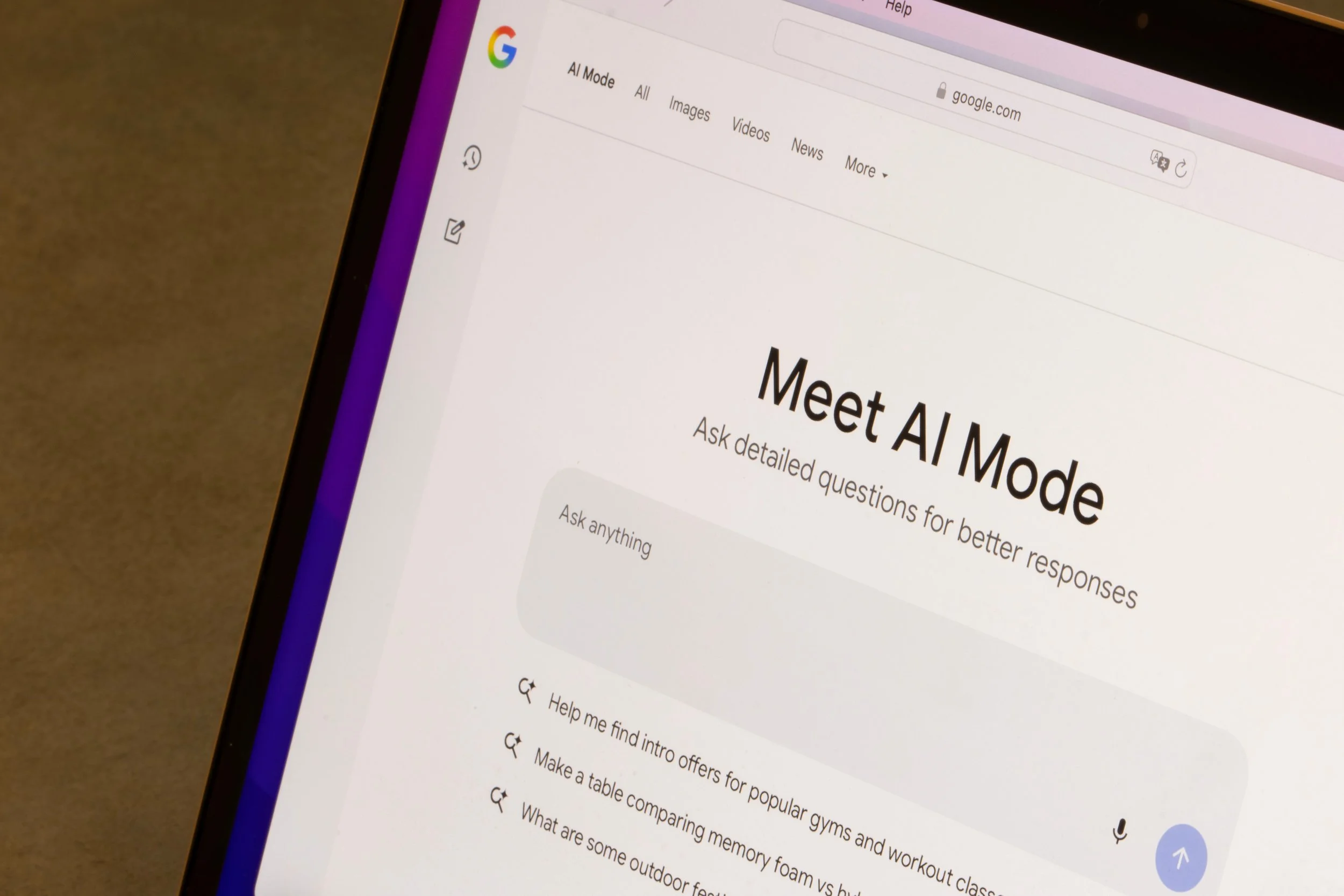
Traditional search and generative search can surface web content differently. In Google's AI Mode and AI Overviews, for example, Google can retrieve relevant information from its Search index and use techniques such as retrieval-augmented generation and query fan-out to help construct a response.
Two practical implications follow. First, important information should be easy to locate within the page rather than buried beneath generic introductions. Second, content planning should consider the broader questions people ask around a topic rather than relying only on one exact keyword phrase. The framework below addresses both to improve your AI search results and overall AI search and discovery.
Research also tells us which passages get reused. The paper that introduced the term Generative Engine Optimization, published in November 2023 by researchers from Princeton, Georgia Tech, the Allen Institute for AI, and IIT Delhi on arXiv, tested content edits across a benchmark of 10,000 real queries. Adding citations to reputable sources, direct quotations, and specific statistics raised a source's visibility in generative search results by up to 40 percent. That finding shapes step three, and it is the most actionable result in the whole field of SEO for Generative Engine Optimization.
How the 6-Step Framework Works
| Step | What You're Improving | Practical Review Question |
|---|---|---|
| 1. Entity clarity | Making the business, service, product, or subject easy to identify | Could a new visitor quickly explain who this page is about and what it offers? |
| 2. Clear answers | Making important information easy to find | Does each important section answer the user's question without unnecessary delay? |
| 3. Supported claims | Improving factual reliability | Are important statistics and factual claims backed by appropriate evidence? |
| 4. Topic coverage | Addressing the broader user need | Does the page answer the related questions a real buyer needs before making a decision? |
| 5. Technical accessibility | Helping search systems access important content | Can search engines crawl, render, and index the important information? |
| 6. Content maintenance | Keeping time-sensitive information accurate | Does the page have a process for reviewing information that can become outdated? |
Step 1: Entity Clarity
Clear business and service information helps both users and search systems understand what a page represents. Entity clarity means stating plainly what kind of business you are, who you serve, where relevant, where you operate, and what you offer.
Before: "We help ambitious organizations unlock their potential through strategic partnership." That sentence could describe a bank, a coach, or a software firm.
After: "We are a Squarespace web design and SEO agency for service businesses in the United States, including consultants, coaches, accountants and home service companies." Category, audience, geography, services. The second version gives both prospective clients and search systems much clearer information about the business.
Keep important business information consistent across the places you control. Use the correct business name, service descriptions, locations, and other factual details across your website and relevant profiles. Consistency reduces ambiguity for customers and systems trying to understand your business.
Step 2: Clear Answers
Many service pages already contain useful information but bury it beneath broad introductions, brand language, or unnecessary context. Review each section and make sure the useful answer appears where a reader expects to find it.
Answer important questions without unnecessary delay. If a section promises an answer, make that answer easy to locate.
Use descriptive headings. Headings can be questions when that matches how users think, but they do not all need to follow a Q&A format.
Keep paragraphs readable. Break up dense text where it helps people follow the explanation rather than targeting a fixed sentence count.
Use tables when comparison genuinely benefits from a table. Pricing tiers, specifications, feature differences, or timelines may be easier to understand in a structured comparison.
Add FAQs only when they answer useful questions not already addressed naturally elsewhere on the page.
Before: an H2 reading "Our Approach," followed by three paragraphs of philosophy and a client anecdote, with the actual process appearing in paragraph four.
After: if timeline is an important user question, a heading such as “How long does a website redesign take?” can make that information easier to find. Followed immediately by "A typical redesign runs six to eight weeks: one week of discovery, two weeks of copy and wireframes, three weeks of design and build, and a final week of testing and launch." The philosophy still belongs on the page. It simply belongs underneath the answer.
Step 3: Support Claims That Need Evidence
When your content makes factual claims, especially statistics, legal or regulatory claims, market data, or research-based statements, give readers a way to verify them. The original GEO research also found that evidence-related edits could improve measured source visibility in its experimental setup, although results varied by method and domain.
Apply three rules to every piece of content.
Prefer the original source where practical. If you cite research, regulations, standards, or public datasets, link to the organization responsible for the information rather than a chain of secondary summaries.
Include dates when the timing matters. A date gives readers context for figures that may change over time.
Do not force a number where no reliable number exists. Explain the mechanism, limitation, or observation instead of publishing an unsupported statistic.
That third rule protects you from the most common trap in this topic. Plenty of widely circulated industry statistics trace back to a vendor blog citing another vendor blog, sometimes recycling a study from decades ago as if it were current. Publishing one of those undermines the exact credibility this framework is built to earn. Accuracy and evidence are more valuable than adding a statistic simply because it sounds authoritative.
First-party information can make a page more distinctive when it is accurate and appropriate to publish. Examples include real project timelines, transparent pricing structures, documented client outcomes, or patterns your team has observed repeatedly. Because competitors cannot simply copy genuine first-hand experience, this information can add useful differentiation.
Step 4: Cover the Questions That Matter Around the Topic
Google's query fan-out can retrieve information across related subtopics when responding to a complex question. For content teams, that is another reason to understand the broader decision a user is trying to make rather than optimizing only for one exact phrase.
Take "web design pricing." The adjacent questions include what drives cost up, what a typical timeline looks like, what is included and excluded, how monthly plans compare with one-off projects, what happens if scope changes, who owns the files afterward, and what ongoing costs follow launch.
For example, someone researching “web design pricing” may also want to understand what increases the cost, what is normally included, typical timelines, one-time versus ongoing costs, what happens when scope changes, and who owns the finished assets. A strong resource should cover the questions that genuinely belong to that buying decision.
Build the map from real sources: the People Also Ask boxes on your target query, the follow-up questions AI tools suggest when you ask the main one, your own sales call notes, the questions clients email after signing, and even platforms like Reddit and Quora to see what users ask. Sales calls and customer emails can be especially useful because they reveal real questions and objections that keyword tools may not capture.
Then decide the structure. Closely related questions belong in one thorough page. Substantial questions deserve their own page linked back to the pillar. Both patterns work. Publishing ten thin pages that each restate the same idea works for neither readers nor engines. A strong SEO plan focuses on creating content that people need.
Step 5: Technical Access and Structure
Technical accessibility determines whether search systems can successfully crawl, render, and index important information. For Google Search, the same core technical SEO practices that support conventional Search also remain relevant to AI Overviews and AI Mode.
Make sure important content can be crawled, rendered, and indexed. JavaScript itself is not a problem for Google, but JavaScript-heavy sites can introduce additional crawling and rendering complexity. Follow standard JavaScript SEO practices when important content relies on scripts.
Use sensible page structure. Clear headings, lists, tables, and semantic HTML can improve usability and accessibility. Google says perfectly semantic HTML is not required for generative Search, so prioritize a page structure that works well for people rather than trying to create “AI-perfect” markup.
Decide your AI crawler rules on purpose. OpenAI documents its bots at OpenAI API Docs and separates them by function: OAI-SearchBot surfaces your site in ChatGPT's search features, while GPTBot gathers content that may train foundation models. You can allow one and block the other, and sites that block OAI-SearchBot will not appear in ChatGPT search answers.
Use supported structured data where it genuinely applies to the page and your broader SEO strategy. Do not add schema simply because you expect it to improve AI citations.
On that last point, set expectations correctly. Google's guidance at Google Search Central AI Optimization Guide states that structured data is not required for its generative AI features and that no special schema exists for them, and that Google Search does not use llms.txt or similar AI text files. Google says structured data is not required for its generative AI features and that there is no special GEO schema. Supported structured data can still be useful for eligible Search features when it accurately represents visible page content. Google also says llms.txt and similar special AI text files are not required for Google Search.
Google is equally direct about the wider framing: from Google Search's perspective, optimizing for generative AI search is optimizing for the search experience, and thus still SEO. Treat this framework as an upgrade to your content strategies rather than a parallel program.
Step 6: Keep Time-Sensitive Information Accurate
Some business information becomes outdated quickly: pricing, service areas, team members, software versions, regulations, timelines, and product details. Content maintenance matters because inaccurate or outdated information weakens the usefulness of the page regardless of whether a human or AI system finds it.
Give every important page a named owner and a review date, and keep them in a simple spreadsheet.
Set a review cadence based on how quickly the information can change. Pricing, regulations, product details, platform versions, team information, and service areas may need more frequent review than stable evergreen content.
Update the substance, not the date stamp. Changing a date without changing content fools nobody and erodes trust when a reader checks.
When you refresh, add something: a new example, a newer figure, a question you have started hearing on sales calls.
A rolling refresh also fixes the quiet failure mode of good content. A simple ownership system helps prevent useful pages from becoming inaccurate over time. Assigning an owner and review trigger is often more practical than relying on someone to remember that a page needs updating.
Example: Applying All Six Steps to a Service Page
Consider a hypothetical financial planning page titled “Retirement Planning Services.” It opens with a mission statement, describes the team's credentials, lists broad benefits, and ends with a contact form. The useful information a prospective client actually needs is difficult to find.
The rewrite changed six things and invented nothing.
Step one: the opening line named the firm as a fee-only retirement planning practice for households within ten years of retirement, in its state.
Step two: the opening was rewritten to explain the service and audience clearly before moving into additional context.
Step three: the page added its actual fee model, minimum asset level, and typical meeting cadence, plus two named regulatory sources for the rules it referenced.
Step four: it absorbed four adjacent questions the team heard constantly, on Social Security timing, tax sequencing, healthcare costs before Medicare, and what happens to the plan if markets fall early in retirement.
Step five: the developer checked that important service information was crawlable and rendered correctly rather than relying on a presentation component that made the content difficult to access.
Step six: the page got an owner and a quarterly review date.
Every one of those changes made the page more useful to a human being. That is the strongest signal that a framework is sound rather than fashionable: Every change also improves the page for a human reader. That is an important test for the framework: the goal is not to rewrite content for machines, but to make genuinely useful information clearer and easier to access.
How Should You Evaluate the Update?
Measure the page against the purpose of the change rather than assuming an AI citation is the only success metric.
Useful signals can include:
whether Google can crawl and index the updated page;
relevant impressions and organic clicks;
conversions or qualified inquiries from the page;
whether important customer questions are now answered accurately;
directional observations of how the content appears in relevant AI search experiences.
For Google, eligible sites may also have access to Generative AI performance reporting in Search Console.
Avoid treating manual prompt checks as stable rankings. Generated responses can vary between runs and platforms.
Where Should You Start?
Choose one commercially important page and review it through the first three steps:
Make the business, service, and audience clear.
Move important answers to places where readers can find them easily.
Replace vague or unsupported claims with accurate, useful information.
Then review the page's broader topic coverage and technical accessibility before deciding whether additional content is actually needed.
If you are ready to put this framework into action and want an expert partner to guide you, contact Knapsack Creative today to see how we can help.
Frequently Asked Questions
1. Is there a specific content format that AI search engines prefer?
There is no universal format that guarantees AI visibility. Use the structure that best helps the reader understand the information: clear headings, readable paragraphs, lists where appropriate, and tables when they genuinely improve a comparison. Google explicitly says there is no requirement to break content into small “chunks” for generative AI.
2. Do citations and statistics improve AI visibility?
The original GEO research found that evidence-related edits, including citations, quotations, and statistics, could improve measured visibility in its experimental setup, with gains of up to 40% in some conditions. That does not mean adding statistics automatically improves visibility across every AI platform. Use evidence because it makes factual content more useful and verifiable, not simply as a GEO tactic.
3. Do I need schema markup to appear in AI Overviews?
No. Google says structured data is not required for its generative AI Search features, and there is no special schema markup for AI Overviews or AI Mode. Continue using supported structured data where it benefits your broader Search strategy and accurately represents visible page content.
4. Should I create an llms.txt file?
Google's AI documentation confirms that Google Search does not use AI text files or Markdown files and that having one neither helps nor hurts rankings. Create one only if a specific service you rely on actually reads it.
5. How often should I update content for AI search?
Review commercially important pages quarterly and reference content twice a year. Update the substance rather than the date stamp, since changing a published date without changing content misleads readers and earns nothing. This ensures your content creation and SEO strategies stay fresh for AI-powered search engines and general search generative features.
6. Should I block or allow AI crawlers?
Decide deliberately. OpenAI separates OAI-SearchBot, which surfaces your site in ChatGPT search results, from GPTBot, which collects content that may train models. Blocking OAI-SearchBot removes you from ChatGPT search answers, so most businesses allow it. Understand how AI tools like these crawl your site.
7. What is query fan-out and why does it matter for content?
Query fan-out is a technique Google uses in its generative Search experiences to issue multiple related searches around a complex question. For content teams, the practical implication is to understand the wider user need and cover relevant subtopics naturally rather than creating a separate page for every query variation.